What your child eats during the day is one factor that can make a real difference to their sleep. Here's what the evidence says about the practical links between diet and sleep in young children, and what is worth trying at home.
Every parent knows the feeling. You’ve done everything right — the bath, the story, the darkened room — and your toddler still won’t settle. While there are many reasons a young child might resist sleep or wake frequently, what they’ve eaten that day is one area worth paying attention to.
This blog looks at the practical ways that what your child eats — and when — can support better sleep, and what’s worth avoiding.
Why sleep and diet are more connected than parents think
Sleep is regulated by hormones — primarily melatonin, which signals to the brain that it’s time to sleep, and serotonin, which helps regulate mood and the sleep-wake cycle. Both are influenced by what a child eats.
Amino acids are the building blocks of protein, and one in particular — tryptophan — helps the body produce serotonin, which in turn converts to melatonin. Sources of tryptophan include chicken, turkey, fish, shellfish, dairy (especially milk and cheese) and eggs. For plant-based sources, oats, bananas, beans, lentils, tofu and nuts all contain tryptophan too.
For the body to convert tryptophan into serotonin, it needs a range of other nutrients too — including iron, vitamin B2 and B6. So offering your child a varied diet with plenty of different foods is the simplest way to cover all the bases and ensure the body has what it needs.
And so, you could consider including some of these foods later in the day and/or as bedtime snacks for your child.
Foods and timings that support better sleep
Starchy carbohydrates at tea time — wholemeal bread, rice, pasta, potatoes — alongside a good source of protein make for a satisfying, balanced evening meal that isn’t too heavy before bed. Protein-rich foods such as chicken, eggs, fish, beans and lentils are important for children’s growth and development, and a meal that includes both a starchy carbohydrate and a protein source tends to be more satisfying than one without — which can only be a good thing come bedtime.
What to avoid — and when
Frequent consumption of sugary foods can affect dental health. If sweet foods are offered, earlier in the day is better than close to bedtime.
Drinks matter too. The only drinks young children need are milk and water. Juice and squash aren’t something children need — and if they are offered occasionally, earlier in the day is better than close to bedtime, with teeth brushed afterwards.
It’s also worth avoiding caffeine in the hours before bed — this includes hot chocolate, chocolate-based foods, tea and coffee, all of which can make it harder for children to wind down and sleep.
Try to avoid offering a favourite food as the bedtime snack — children can start to associate bedtime with that food and may begin to refuse dinner in anticipation of it.
Frequently asked questions about children’s diet and sleep:
It can — though it’s worth remembering that sleep is influenced by many things, including developmental stages, overtiredness, illness, too hot/cold, or they’ve had a bad dream. Diet is just one factor. That said, a balanced, varied diet based on whole foods gives the body the best conditions to wind down and rest — and it’s one factor that parents can do something about.
If dinner is eaten early or your toddler simply has a small appetite at mealtimes, they may genuinely be hungry again as bedtime approaches — and a small snack can help them settle. That said, it can also be a well-practised stalling tactic, so bear that in mind, as you know your child best.
A good rule of thumb: if there’s less than two hours between dinner and bedtime, they probably don’t need one. If they do ask for a snack, keep it small and light. It isn’t meant as a meal replacement, but rather a top-up.
Bedtime snacks may include:
Butter bean dip with oatcakes or wholemeal pitta bread
Cream cheese and cucumber on oatcakes
Plain yoghurt with banana and nut butter
Milk is a nutritious drink option at bedtime, but it can fill up little tummies quickly before they’ve had time to take in other nutrients, so just offer a small cup. From twelve months, whole cow’s milk or an unsweetened, calcium-fortified plant-based alternative are both suitable.
Even for a bedtime snack, keep the routine consistent — sit at the table rather than on the sofa or in the bedroom. This helps keep a clear boundary between eating time and wind-down time, and avoids the snack becoming part of an extended bedtime negotiation.
Keep it brief — around 15 minutes is plenty. Once the snack is finished, move straight into the rest of the bedtime routine, and don’t forget to allow time for teeth brushing before the final wind-down. The key is not to let the snack drag out or become a source of stress. Offer it calmly and keep it simple.
Three things you could try at home tonight
Offer a balanced evening meal. Protein, a starchy carbohydrate, and vegetables — aim to finish at least an hour before bed. It’s easy for tea to become carb-heavy on busy days, so it’s worth checking there’s a protein source in there too. For example, a simple bowl of pasta with a tomato and lentil sauce and a side of steamed broccoli ticks all the boxes.
Swap out sugary snacks and drinks. Offer water or milk instead of juice or squash, and avoid caffeine before bed.
Keep any bedtime snacks boring — on purpose A simple, plain snack works best at bedtime — if it’s too appealing, dinner may start to get left behind in favour of it. Brush teeth afterwards and keep snack time to around 15 minutes
How we structure mealtimes around rest at Partou
At Partou, our menus are developed by Laura Matthews, a Registered Nutritionist (RNutr) specialising in early years nutrition, and are structured to support children’s energy and wellbeing across the full day — including the rest that happens in the middle of it.
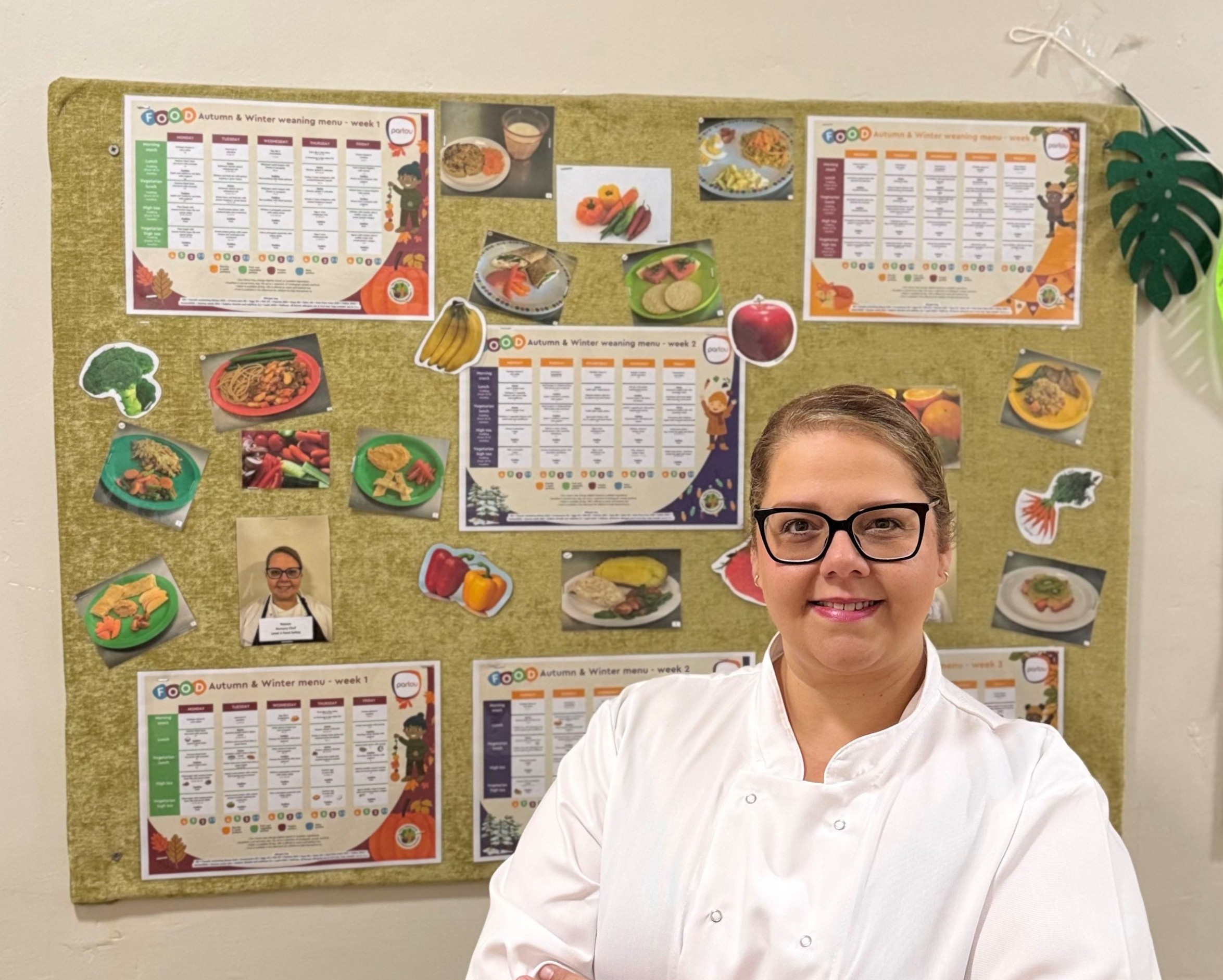
Lunch is planned to be satisfying and varied without being so heavy that children find it hard to settle. Second dishes are always fruit, vegetables, starchy carbohydrates, and/or yoghurt-based. Afternoon snacks are timed and balanced. And the only drinks we serve are water and milk — no juice or squash. Take a look at our seasonal and delicious three-week rotating menus.
Sleep is rarely down to one thing, and there’s no guaranteed fix. But paying attention to what your child eats and when is a simple, practical step that supports their overall health and wellbeing — and that’s always worth doing.
This article is intended as general information for parents and carers. If you have concerns about your child’s sleep or diet, please speak to your GP or health visitor.
Market Harborough nursery chef nominated for national award
Naiane Serafin Godinho, Nursery Chef at Partou Progress House in Market Harborough, has been shortlisted for Chef of the Year at the National NMT Nursery Awards 2026.
Nursery Manager Nina Halls shares what makes Nai's passion for early years nutrition stand out.