


The Partou Guide to Play
Play is how children make sense of the world around them. It’s how babies, toddlers and pre-schoolers build connections, test ideas, and develop confidence, creativity and independence.
To mark International Day of Play in support of UNICEF, we asked almost 900 Partou educators across 99 nurseries what children genuinely love to play with and, through their expert understanding of early years development, what truly helps children to thrive. Every day, our educators use their specialist knowledge and experience to create play-based learning environments that support children’s communication, confidence, creativity, problem-solving and emotional and physical wellbeing.
Because in the early years, play is far more than a bit of fun, it is how children make sense of the world, build relationships, develop resilience and lay the foundations for lifelong learning and success.
The answer wasn’t expensive toys or complicated activities. Again and again, educators told us the same thing: children are happiest when play is simple, sensory, active, imaginative and led by their own curiosity.
Our Partou Guide to Play brings together those insights, along with easy, low-pressure ideas families can use at home. Because meaningful play doesn’t need to be perfect, it just needs time, space and connection.
Children’s favourite play activities
- Songs, stories and books were among the highest-rated activities for babies.
- Outdoor play was the most-loved activity for toddlers and pre-schoolers.
- Sensory play featured across every age group.
- Children consistently preferred open-ended play over structured activities.
The message from educators was clear:
“The best play experiences are often the simplest.”
The five big play truths
Outdoor play is real learning
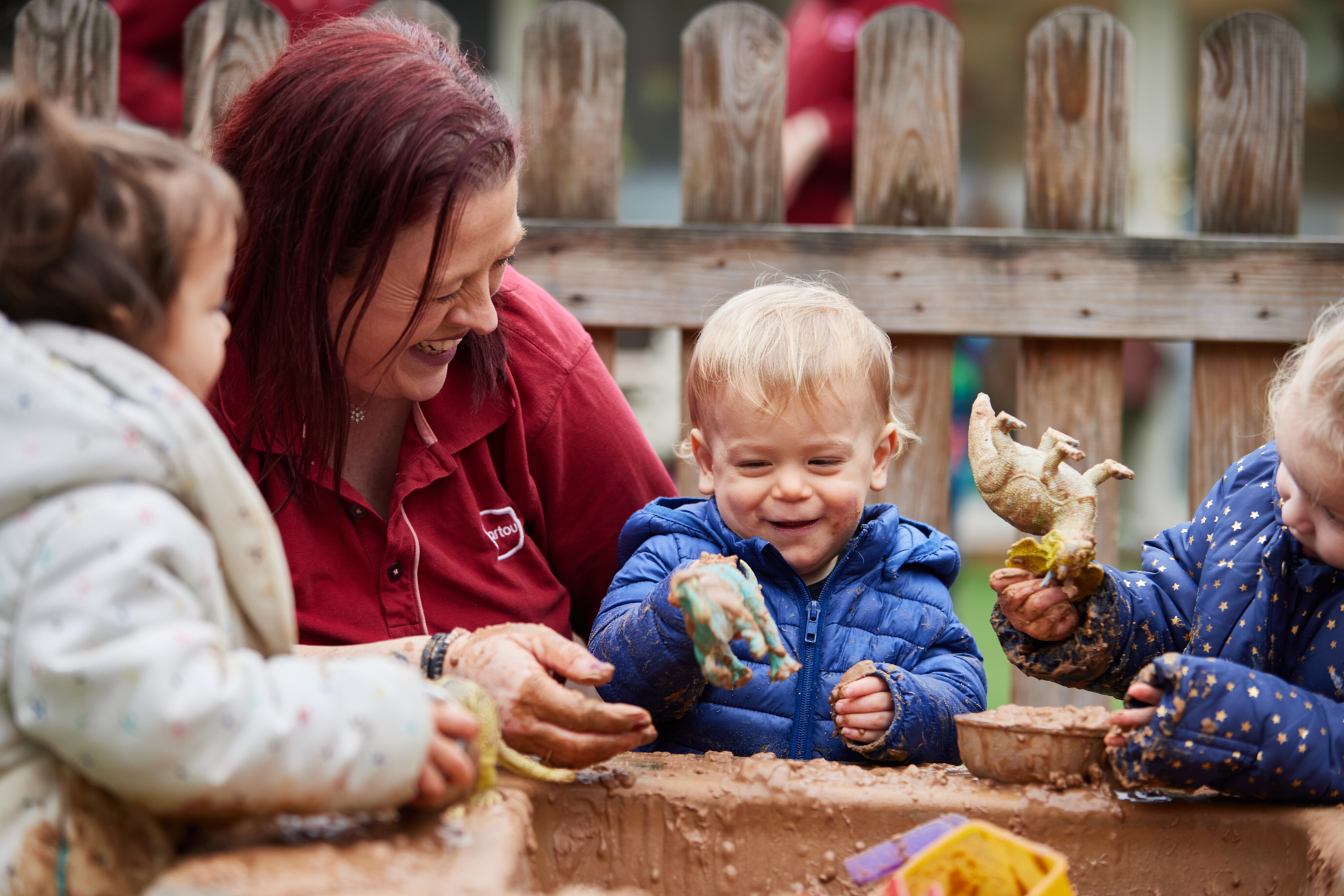
Outdoor play isn’t a break from learning, it IS learning. Whether they’re climbing, balancing, splashing through puddles or exploring the world around them, children develop important physical, emotional and social skills every time they play outside.
80% of our Partou educators agreed that outdoor play is a top activity across all early years age group with physical development cited as the principal benefit.
Outdoor environments encourage children to:
- Test their limits
- Assess risk
- Move their bodies
- Build confidence
- Solve problems
- Explore with curiosity
Unlike more structured activities, outdoor play often changes moment to moment. A stick becomes a fishing rod. A muddy patch becomes a kitchen. A fallen tree becomes a balancing beam.
These experiences also play an important role in building resilience, independence and imagination. Whether children are climbing, balancing, building dens, creating their own games or working out how to overcome obstacles together, they are constantly learning to assess risk, adapt when things don’t go to plan, persevere through challenges, work with others, think creatively and build confidence in their own abilities.
Outdoor play also supports emotional wellbeing. Fresh air, movement and open space can help children regulate emotions, release energy and feel calmer and more connected. And it doesn’t need to be complicated.
Here are some outdoor activity ideas:
The goal isn’t perfection. It’s giving children opportunities to move, practise skills they’ve learned, discover and experience the world around them in their own way.

Riding bikes and scooters

Spotting birds and insects

Going on scavenger hunts

Jumping in puddles

Collecting leaves and sticks

Building dens from blankets or branches

Balancing on low walls

Visiting the park

Running, climbing and exploring freely
Sensory play builds brains
For young children, sensory play is far more than just fun.
While it can sometimes feel chaotic for adults, it is often deeply calming and absorbing for children. From splashing water and squeezing playdough to scooping sand or exploring different textures, sensory experiences help children understand the world through touch, movement, sound and exploration.
Almost 9 in 10 of the Partou educators surveyed consistently highlighted sensory play as one of the most valuable and engaging experiences for children of all ages.
Sensory play involving touch, sound, taste, movement and texture supports:
- Language development
- Creativity
- Emotional regulation
- Concentration
- Problem Solving
- Confidence
It also encourages children to experiment, practise and try again and follow their own curiosity. These are all important foundations for learning.
Thankfully, sensory play doesn’t need expensive resources or advance planning.
Here are some sensory play activity ideas:
Children are often most engaged when they can pour, mix, scoop, squeeze, splash and explore freely at their own pace.
Natural objects like leaves, sticks and stones

Sand

Kitchen utensils

Water bowls and cups

Bubbles

Scarves and fabrics

Homemade playdough

Cardboard tubes
Stories and songs matter most
Some of the most powerful learning moments still happen through stories, rhymes and conversation.
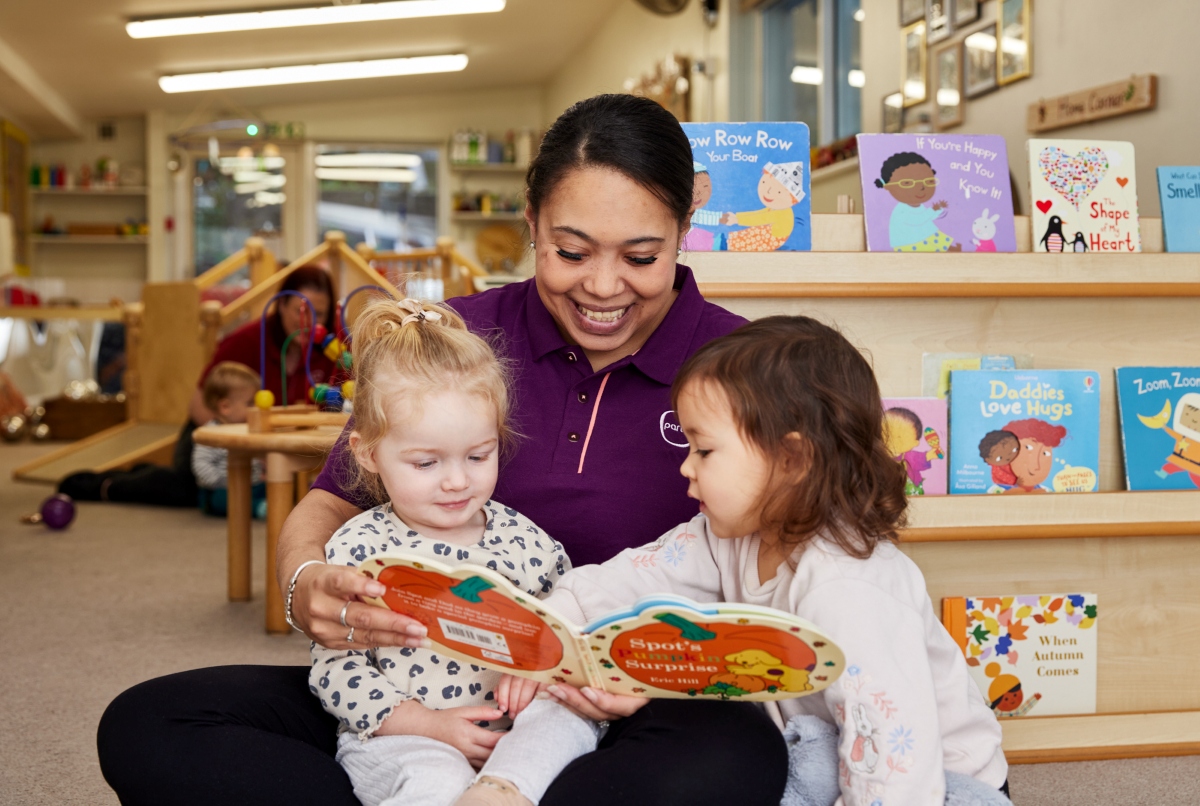
Long before children learn to read or write, they learn through listening, watching, repeating and connecting with the people around them. Songs, books, poems and storytelling help children build language, confidence, imagination and emotional security from the very earliest years.
Approximately 8 out of 10 educators consistently highlighted stories, singing and musical activities as some of the most valued experiences across every age group.
Stories, songs and musical activities support:
- Communication and vocabulary
- Listening skills
- Memory and concentration
- Attachment and connection
- Imagination and creativity
- Emotional understanding
Don’t worry – you don’t need to channel your inner Shakespeare. Some of the richest learning happens through everyday routine singing and storytelling:
Here are some simple items you can use at home for sensory play activities:
These activities all support children to build early literacy skills as well as instilling a love of books and music in those important early years.

Reading a bedtime story together

Singing whilst in the car

Repeating favourite books again and again

Making up stories or talking about the day at bathtime

Sharing nursery rhymes

Telling stories without screens or distractions
When children pretend, they practise real-world skills
Imagination is serious work; whether they’re running a make-believe café, caring for a teddy, building a spaceship from a cardboard box or turning the sofa into a pirate ship, imaginative play helps children make sense of the world around them.
Role play allows children to experiment with ideas, relationships, emotions and everyday experiences in a way that feels safe and enjoyable.
Approximately 90% of pre-school educators highlighted imaginative play as one of the most engaging play experiences for this age group.
Because there is no ‘right’ or ‘wrong’ outcome, pretend play encourages children to think creatively, make independent decisions, adapt when things don’t go to plan and build confidence through exploration.
Imagination play helps children to develop:
- Language and communication
- Creativity and problem-solving
- Emotional understanding
- Social skills and confidence
- Empathy and cooperations
- Independence
Imaginative play also gives children the opportunity to process experiences they may not yet fully understand. Recreating routines, conversations or situations through play helps children build confidence and familiarity over time.
Because the magic often comes from the child’s imagination rather than the toy itself, role play doesn’t need expensive costumes or designated playrooms.
For imagination based play, children are often happiest with simple, open-ended resources such as:
In these moments of pretending, children are developing skills they will use for life.

Dolls and teddies

Homemade “shops” or cafés

Cardboard boxes
Toy Kitchens and food
Blankets and cushions

Puppets

Dressing-up clothes

Small world toys and figures
Children don’t need more toys
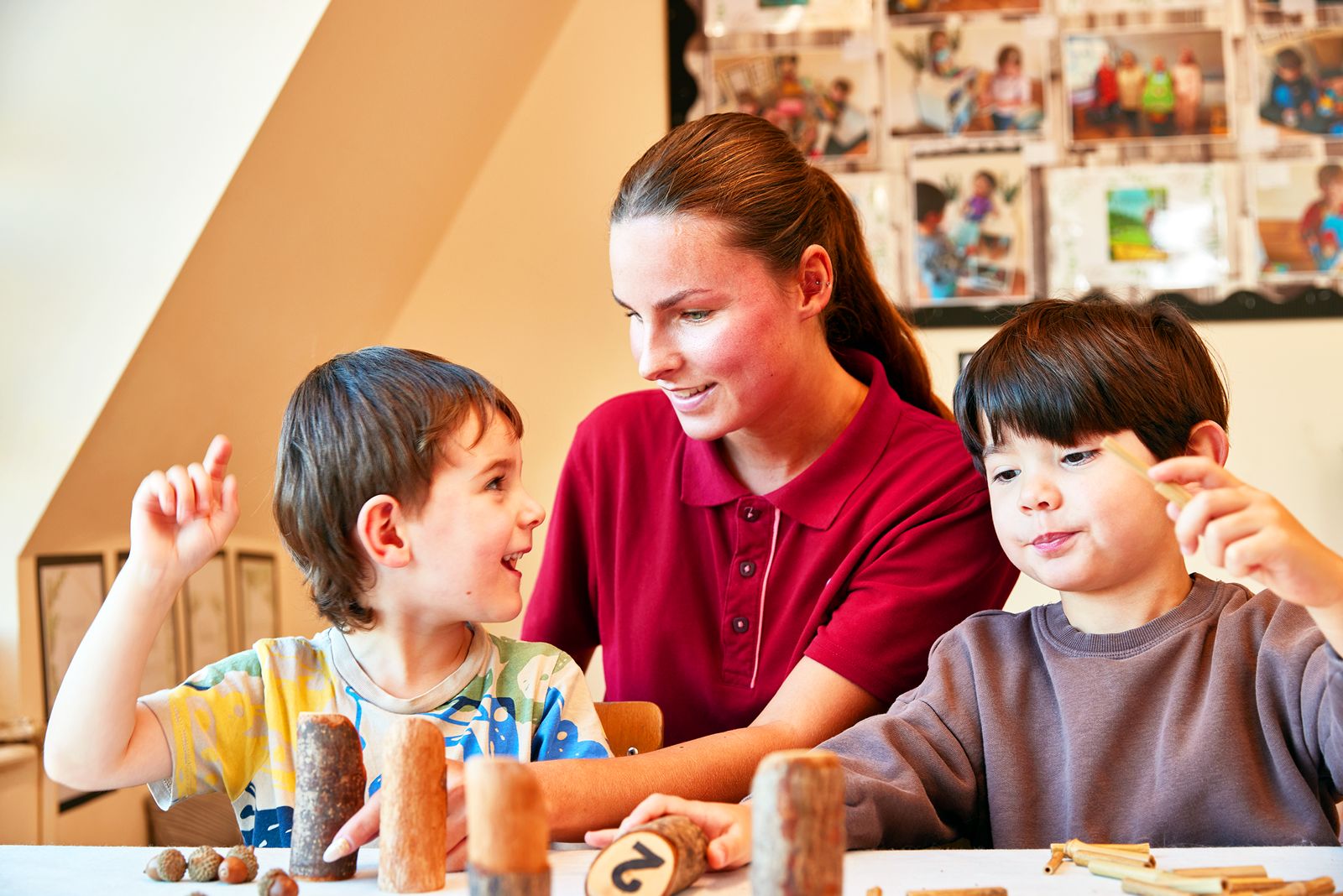
One of the clearest messages from educators was that children do not need expensive, endless toys or constant entertainment to play well.
In fact, some of the richest play experiences come from the simplest everyday objects.
Children are naturally imaginative. Given time, space and freedom to explore, ordinary items can quickly become castles, dens, cafés, obstacle courses, boats or secret hiding places.
Simple resources often encourage more creativity because there is no fixed rule about how they should be used and they allow children to decide what the play becomes.
Here are some handy household items children are often drawn to for play:
Blankets, cushions and boxes

Pegs and containers
Loose parts and recycled materials
Wooden spoons and kitchen utensils
Scarves and fabric
Natural objects like sticks and leaves

Building blocks
These kids of open-ended materials encourage children to:
- Experiement
- Problem-solve
- Create independently
- Use their imagination freely
Importantly, children do not always need adults to lead or direct their play. Interestingly more than a third of the Partou educators surveyed reported that children lose interest in activities they regard as too structured or adult-led, such as ‘table-top’ tasks.
Moments of boredom can actually be valuable because they create space for creativity, independence and curiosity to emerge. loose parts and recycled materials natural objects like sticks and leaves building blocks.
Sometimes the best thing we can give children is the freedom to play in their own way.
Play ideas for each age group
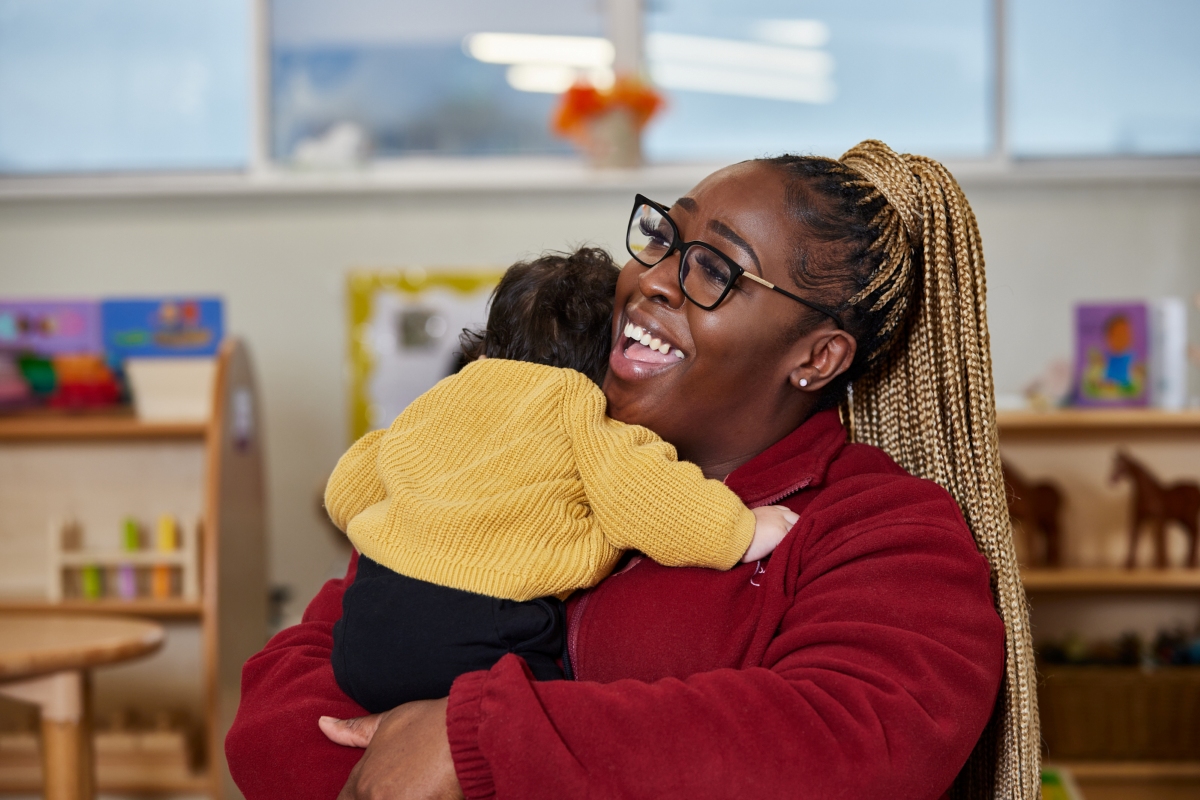
Play ideas for babies aged 0-2
Treasure baskets
Ideas for play: Fill a basket with safe, everyday objects (wooden spoons, soft fabrics, brushes) for your child to explore.
What children learn: Curiosity, sensory awareness, and early problem solving as they explore different textures and objects.
Water play
Ideas for play: Splashing hands in a bowl, pouring from cups, or playing during bath time.
What children learn: Their actions make things happen, coordination, and early scientific thinking.
Posting and filling
Ideas for play: Dropping pom poms or balls into cardboard tubes or boxes.
What children learn: Hand–eye coordination and spatial awareness.
Songs and rhymes
Ideas for play: Repeating favourite songs with actions.
What children learn: Language development, memory, and connection with others
Top tip: Sit alongside your child and describe what they’re doing, this helps build language and connection.
Play ideas for toddlers aged 2-3 years
Simple role play
Ideas for play: Pretending to cook, care for dolls, or go shopping.
What children learn: Understanding of the world, social skills, and imagination.
Mark making
Ideas for play: Drawing, painting with water, or using chunky crayons.
What children learn: Early writing skills, creativity, and fine motor control.
Building and stacking
Ideas for play: Using blocks, boxes, or recycled materials.
What children learn: Problem-solving, balance, and early mathematical concepts like size and shape.
Helping in the kitchen
Ideas for play: Washing vegetables, mixing, or cutting ingredients.
What children learn: Independence, coordination, and understanding routines.
Outdoor adventures
Ideas for play: Collecting leaves, jumping in puddles, or exploring local areas.
What children learn: Physical development, confidence, and connection to the natural world.
Top tip: Follow your child’s ideas rather than leading the play, there’s no ‘right’ or ‘wrong’ way to play.
Play ideas for pre-schoolers aged 3-5 years
Small world play
Ideas for play: Creating stories with animals, figures, or vehicles.
What children learn: Storytelling, language development, and understanding emotions.
Creative projects
Ideas for play: Junk modelling, painting, or making simple crafts.
What children learn: Creativity, planning, and expressing ideas.
Obstacle courses
Ideas for play: Using cushions, chairs, and outdoor space to move in different ways
What children learn: Coordination, risk-taking, and body awareness.
Cooking together
Ideas for play: Making simple recipes like biscuits or fruit salads.
What children learn: Following instructions, mathematical skills (measuring), and independence.
Storytelling
Ideas for play: Acting out favourite stories or making up new ones together.
What children learn: Imagination, confidence, and communication skills.
Top tip: Give children time to stay deeply engaged in play, this is where the richest learning happens.
The best play is often the simplest
Children do not need constant entertainment, expensive toys or perfectly planned activities to thrive.
What they need most is time, connection, movement, curiosity and the freedom to play in their own way.
Whether it’s building dens from blankets, splashing in puddles, reading the same story for the fiftieth time or turning a cardboard box into a spaceship, these moments shape the way in which our little ones simply translate the complex world in front of them.
For young children, play is never “just” play.
Through play, children build confidence, communication, creativity, resilience and relationships. They explore the world around them, process emotions, solve problems and discover who they are.
It’s important to remind ourselves that often, the moments children remember most are not the perfectly planned ones, but the simple moments of joy, connection and discovery that come from…

Laughing together
Making up stories
Getting muddy
Singing songs
Balancing on walls

Collecting treasures
The best play is often the simplest
At Partou, our educators are our most valuable resource. The time they invest in helping children feel secure, supported and connected gives them the confidence to be curious, imaginative, creative and adventurous. This is what creates the foundations for truly meaningful play.
Play is not something children do as a break from learning, play IS learning
Visit a Partou nursery to experience our playful approach to learning
Search for a nursery
Search our nurseries by name, town, city or postcode.