Benefits of outdoor play for children: why it matters in the early years
Outdoor play might look like it's just for fun, but it works wonders for children's early years development. Here's what they're gaining every time they head outside, whatever the weather.
Outdoor play is sometimes viewed as a break from the “real” learning that takes place indoors in a nursery. In fact, it provides rich and meaningful learning opportunities; it is not a pause from learning but learning in its own right. Outdoor experiences support children’s physical development, help build resilience, and can contribute to strengthening their immune systems. They also offer space for children to take supported risks, explore freely, and learn in ways that indoor environments cannot fully replicate. For young children, the garden, the woods, and even the puddle by the gate can all serve as valuable and important learning environments.
What are the developmental benefits of outdoor play?
Outside, children move differently, engage their senses in new ways, and set themselves exciting challenges. Here are some of the important benefits of outdoor play:
Physical development: Running across uneven ground, climbing, balancing on low walls, and carrying a heavy watering can all build gross motor skills, coordination, and bone density. Open space gives children the freedom to move their bodies in different ways and offers unique learning experiences.
A stronger immune system: Time outdoors exposes children to a wide range of everyday microorganisms, which encourages immune system development. Sunlight also supports vitamin D production which is important for healthy bones.
Mental health and emotional regulation: Being outside provides children with a place to feel calmer and more emotionally grounded. The space, fresh air and freedom to move offer a natural way for children to work through big feelings whilst being supported by adults they trust.
Social skills: Open ground gives children the chance to experiment with different group dynamics. They negotiate whose turn it is on the slide, collaborate to build dens as a team, and work out the rules of a game as a group.
Cognitive development: Outdoor play gives children lots of opportunities to explore, investigate, and solve problems. They can discover how water moves, work out where to place their feet when walking over uneven ground, and learn what happens when they try different actions. Through these hands-on experiences, children develop their understanding of how the world works.
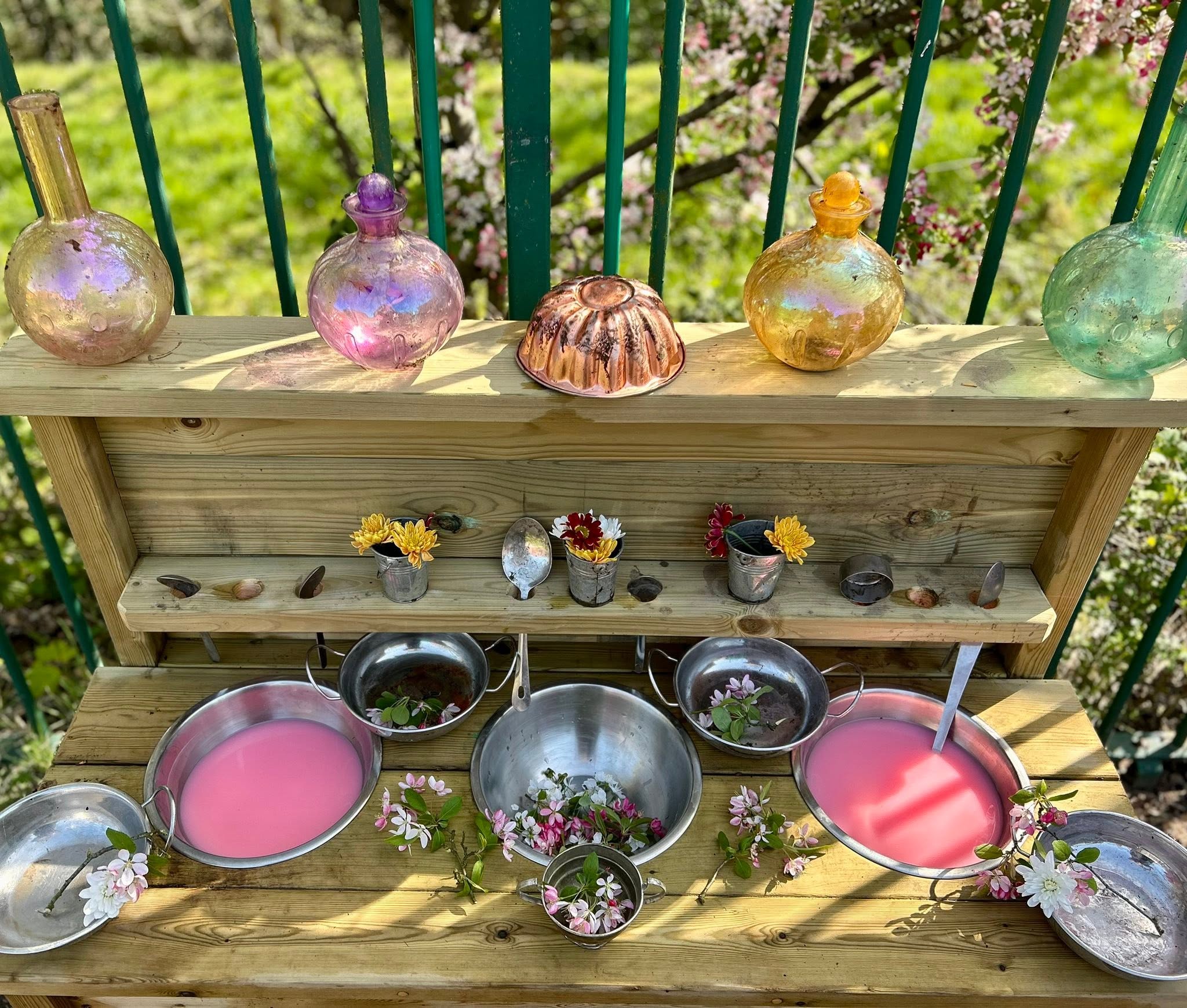
Creativity and imagination: Because natural materials have no fixed purpose, children can use them in any way they imagine, continually reinterpreting and reinventing them to suit different games and ideas. A stick becomes a fishing rod, water becomes a potion and a pile of leaves becomes a mountain to climb.
Language development: The outdoors gives children exciting new words to use. They learn what slippery, soggy, frost, and beetle mean by encountering them firsthand, building vocabulary in a way that feels meaningful and memorable.
Resilience and confidence: When a child challenges themselves to climb a little higher or jump a little further and succeeds, they develop confidence in their own abilities and feel a sense of achievement. Managed risk-taking, where children set the pace and an adult stays close by, helps them learn to trust their bodies, make decisions, and persevere when things are difficult.
What about the weather?
There’s no bad weather, only unsuitable clothing. With waterproofs and warm layers, children can enjoy being outside in different weather conditions, and there are a lot of benefits for them.
Rainy days can offer some of the richest opportunities for play. Puddles encourage jumping, splashing, and observing how water moves and spreads. Cold-weather play supports the immune system and provides chances to explore frost and ice while noticing seasonal changes. In warmer months, outdoor play continues with appropriate sun protection such as shade, hats, and sunscreen to help keep children comfortable and safe.
In Scandinavia, young children are encouraged to play outdoors throughout the year, whatever the weather. Research suggests that regular outdoor play can help children stay healthy, attend school more consistently, and develop physical fitness. Children are often happy to play in rain and cold weather when they have suitable clothing and are given the opportunity to enjoy being outside.
What does good outdoor provision look like at nursery?
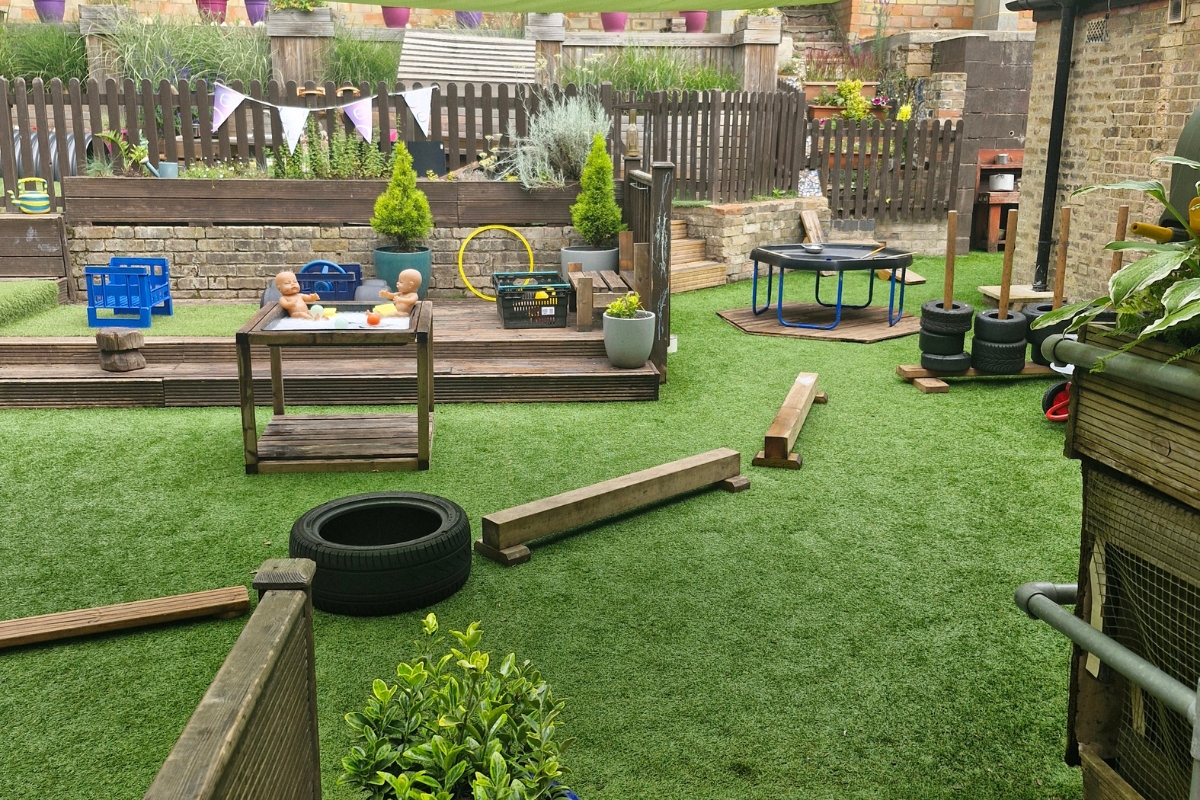
There are a few things worth looking for: daily outdoor access rather than fair-weather days only, age-appropriate equipment, and natural materials like mud, sand, water, and growing plants. Look for safe opportunities to take risks, such as climbing, balancing, and jumping, and for team members who are outside playing alongside the children.
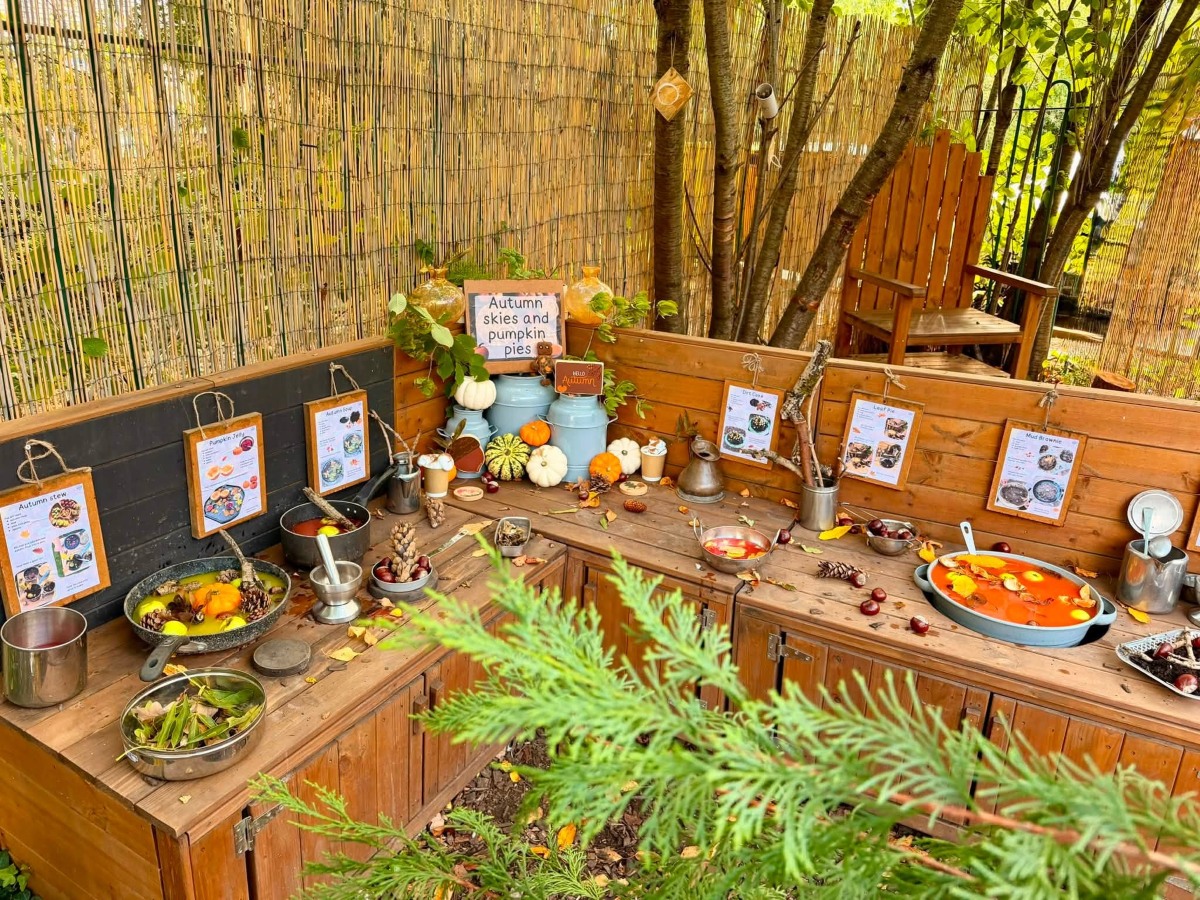
At Partou, outdoor play is part of every day. Children head outside in all weathers, into natural play spaces designed for exploring, with team members beside them following where their interests lead. Outdoor play and learning resources such as mud kitchens, growing areas are important parts of our nurseries, because being outdoors is where so much early development happens. You can find your local Partou nursery to see our outdoor early years provision for yourself.
Outdoor play ideas to try at home
The great part about outdoor play is that the best resources are often the simplest! Here are a few ideas children often love:
Puddle jumping. Pull on some wellies, find a good splashy puddle and enjoy the moment; great for grown up children too!
A nature scavenger hunt. Encourage children to collect leaves, and talk about their similarities and differences. You could discuss colour, shape, feel and even the sound they make; this all provides a great opportunity for building language skills.
A mud pie kitchen. Old pots and pans, soil and water become ingredients for mixing, pouring and creating.
Bug hunting. With a magnifying glass and a patient eye, children can discover insects in parks, planters and even along pathways.
Planting seeds. This could be in a garden, pot or even a yoghurt tub. Planting and watering seeds gives children the joy of caring for something and watching it change week by week.
A brilliant day outdoors
When a nursery tells you the children go out every day, rain included, that’s a good sign. Outdoor play gives children the room to move, the freedom to explore, and the chance to test what they can do, all of which really matters in the early years. A bit of mud and a few wet sleeves usually means a child has had a brilliant day. If you’d like to see what that looks like in practice, your local Partou team would be glad to show you around.
Find your local Partou Nursery
Search for a nursery
Search our nurseries by name, town, city or postcode.
Frequently Asked Questions:
Outdoor play supports children’s physical development, emotional regulation, social skills, and cognitive growth. The open space lets children move freely, take managed risks, solve problems, and play together, building confidence and resilience in ways indoor environments cannot easily match.
The UK Chief Medical Officers recommend children get at least 60 minutes of moderate-to-vigorous physical activity every day. Outdoor play is one of the easiest ways to reach this, and even 10 minutes of outdoor activity can lift a child’s mood and wellbeing.
The EYFS statutory framework requires early years providers to give children access to an outdoor play area, or to plan outdoor activities daily. Good nurseries, provide children with ample opportunities for outdoor play throughout the day, with spaces resourced for genuine learning and exploration.
Yes. With waterproof and warm layers, playing in the rain is safe and good for children. It supports the immune system, sharpens the senses, and offers brilliant play through puddles and water. There’s no bad weather, only unsuitable clothing.
Clocks Go Back 2026: helping your child adjust to the autumn clock change
From early wake-ups to shifting routines, the autumn clock change can feel daunting when you have young children.
Discover gentle, child-led ideas to help your baby or toddler adjust when the clocks go back, with practical tips for sleep, routines and nursery mornings.
Why does my toddler bite? A nursery guide for families
Why do toddlers bite, and should parents be worried? From teething and frustration to communication and big emotions, there are many reasons biting can happen in the early years.
This blog will help you to understand why you child may have bitten and the practical ways adults can help.
Keeping children cool in this heat can feel like a difficult task, learn about the hot weather policies and procedures in place at Partou nurseries and get some top tips for supporting children with the heat at home.