A guide to the benefits of music in early years education
You know you’re the parent of a young child when you find yourself singing the same nursery rhymes over and over again. But did you know how important these early musical experiences are to helping your little one in their development? Here we’ll take a look at the benefits of music in early childhood education.
What Is Music in Early Childhood Education?
Music in early childhood education refers to the structured use of musical activities, such as singing, rhythm games, and movement—to support a child’s cognitive, emotional, and physical development. It involves both listening and participation, helping children build communication skills, coordination, and emotional awareness from infancy through to school age.
Communication and language development
Right from the start, music and sound patterns are important to your child. Studies show that newborn babies, and even infants in the womb, can recognise and respond to music: some parents find that their babies are soothed by the songs they heard during pregnancy after their birth! This early sound recognition ability helps infants to identify their parents’ voices and later, to pick up on words and learn to talk.
It’s no wonder, then, that music can help your child with their communication and language skills. The repetition of those familiar lullabies and nursery rhymes supports word and pattern recognition while singing together encourages the listening and responding that’s needed for communication. For older children, music is also a natural way to learn about rhyming and counting.
Socialising and self-expression
If you’ve ever watched young children respond to music, you’ll have seen how naturally it comes to them to sing, play, do the actions if there are any and move along to the beat. These are all valuable forms of self-expression that allow your child to recognise, explore and express their emotions.. Participating in music at this young age can support children to use their imagination, respond to stories and understand the world.
Music in early childhood is also a social experience: singing those same songs in nursery or at music groups is a great way for children to come together and enjoy a shared culture with their peers. Children connect music with movement, seeking out others to share this experience with and communication.
Physical movement and co-ordination
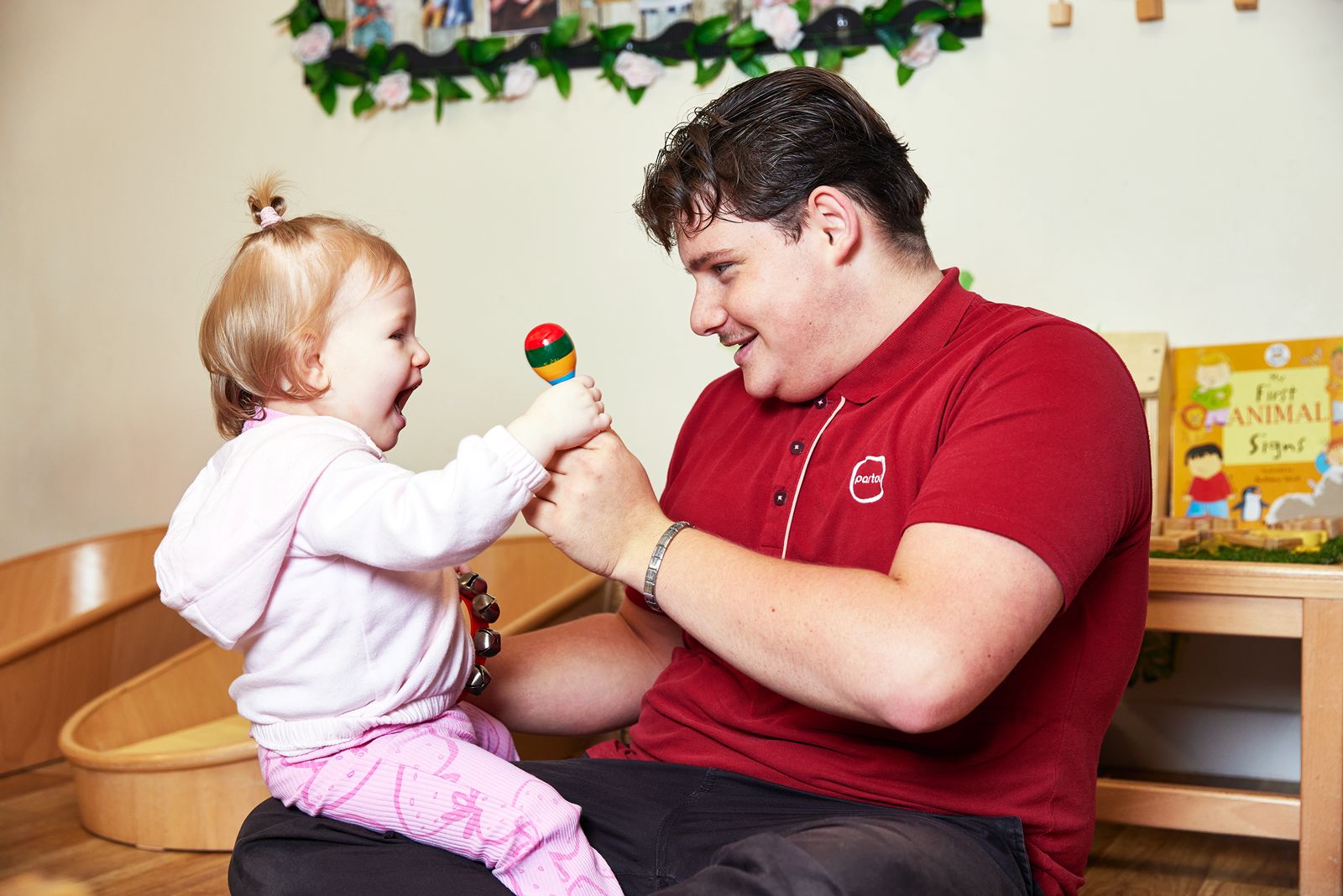
One of the ways we use music in our setting is to help develop physical co-ordination. Encouraging children to dance to the music, or do the actions along with a song, helps their bodies and minds to work together. Music and movement helps children to develop their skills and to practice balance and motor skills.
Dancing supports children’s developing spatial awareness and their dance etiquette (not bumping into your neighbour) too! It also allows us as practitioners to introduce vocabulary for gross motor and fine motor movement along with mathematical concepts that can be “felt out” physically – “that was a big jump, let’s do an even bigger jump!”
How can I enjoy music with my child at home?
We’ve seen the importance of music in early childhood. And there are plenty of simple ways that parents can encourage the appreciation of music in early years at home. If you’d like to support your child’s development through music, here are some example activities that involve music and singing for children.
- Use mood music through the day. Soft lullabies can set the scene for bedtime while dancing to louder beats can help them burn up some of that fabulous energy in the morning!
- Remember though try not to have music on all day long as background music can hinder children who are learning to talk if this is constant throughout the day
- Tell stories through song. There are lots of examples of popular musical stories for early years: We’re Going on a Bear Hunt and Hickory Dickory Dock are two much-loved favourites
- Make your own shakers. Dried lentils, beans and rice all make great shakers. Just fill a plastic bottle and seal it securely, and you’ll have your own, home-made instrument!
- Play musical games. Classics like Musical Statues are a great way to encourage listening
- Clapping out the beat of the music is great for children to physically mirror the rhyme that they hear
- Introduce a range of diverse music to children we like to explore sounds and music for different cultures and backgrounds at nursery as well as different genres such as jazz, classical and dance-based music
- Dance and move with children. It’s so important that as role models we get involved and enjoy this with them
- We often make up songs and rhymes too. Older children love a good nonsense rhyme that can be made up on the spot. We often make up handwashing songs and getting ready for lunch songs too!
- At nursery we quite like to use diverse music in the art area on occasions and ask the children to draw/ paint along to it – what they create can be really interesting and inspirational.
At our nurseries, we use music every day to support children’s learning. But the best thing about music is that it’s fun! Whichever musical activities you do at home, you can be sure it will enrich their lives, help them to learn and foster a love of music for life.
Contact us
For more information about music at Partou nurseries, contact us today.