Nursery rhymes are part and parcel of a young child’s life. And as well as being a lovely way to interact with your baby or toddler, they can actually play a big part in supporting their development! Let’s take a look at some of the benefits of nursery rhymes, how we use them at our nursery, and why they are so helpful in helping children learn.
Benefits of nursery rhymes
As well as being fun to sing and listen to, educational rhymes for babies are really good for their development. Here are some of the skills that babies and toddlers can develop through nursery rhymes:
Communication
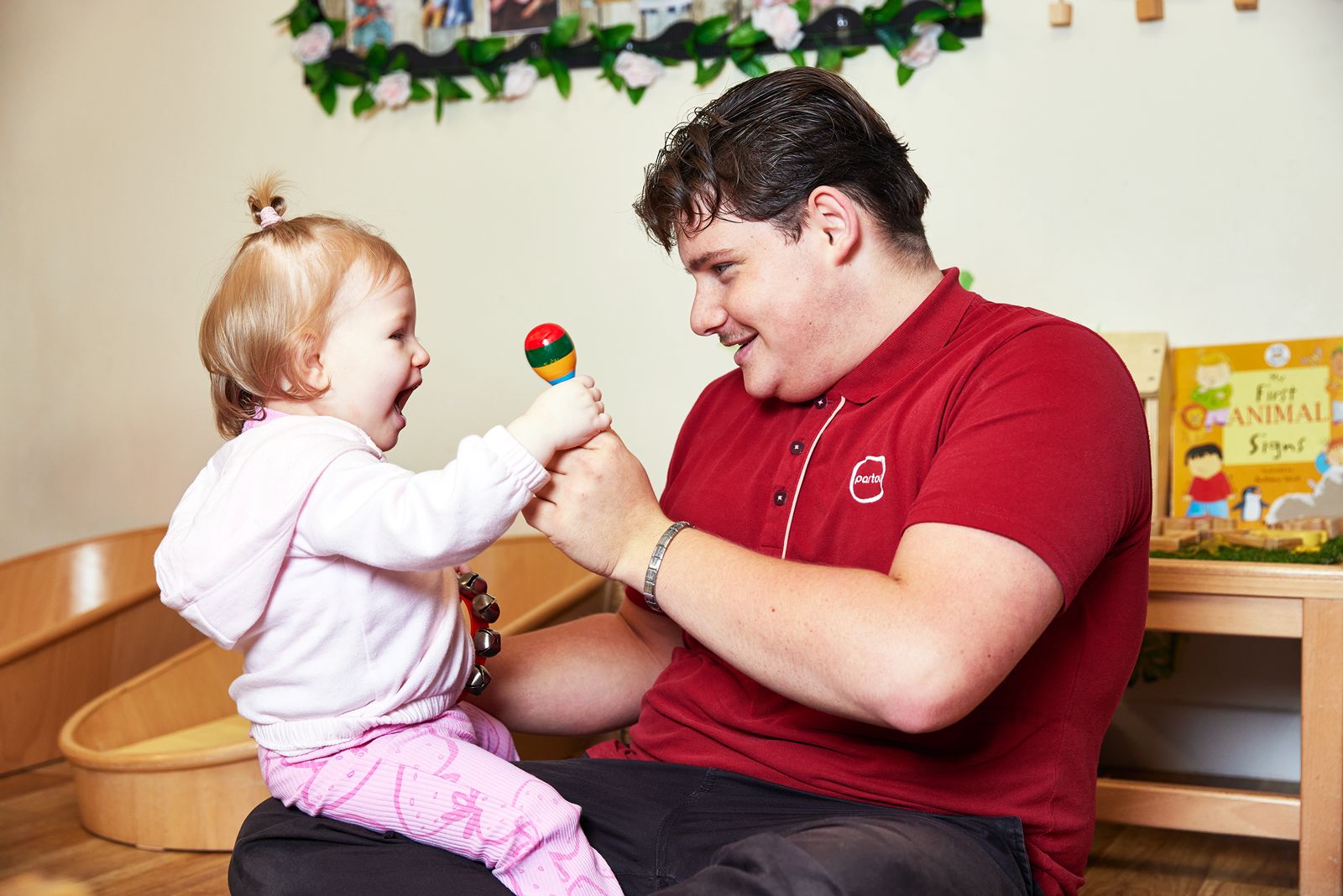
With an abundance of repetitive language and fun rhymes, nursery rhymes are a great way for young children to develop their speaking and listening skills. Singing together is also helpful for non-verbal communication: making eye contact, copying actions and waiting for cues are all important building blocks for your child’s developing communication skills.
Numeracy
Many of the most educational nursery rhymes for toddlers and young children are counting songs. Rhymes like “1, 2, 3, 4, 5, Once I Caught A Fish Alive” and “Five Little Speckled Frogs” make a game of counting, helping children to become familiar with numbers, as well as the concepts of adding and taking away.
Physical and motor control skills
One of the fun things about nursery rhymes is that they usually have actions! “Row, Row, Row Your Boat” is always a favourite for the pretend rowing that goes with it. “Round and Round the Garden, Like a Teddy Bear” helps young children with fine motor skills, tracing a circle on their hands.
Social and emotional skills
Nursery rhymes are a fantastic way for everyone to get together and join in. They can help create a bond between the members of a big group, and also between parent and child.
As well as this, nursery rhymes often tell a story which can help babies and toddlers to make sense of other people’s feelings. For example, in “Jack and Jill Went Up The Hill”, children will learn to empathise with the pair, who hurt themselves when they fall down.
Favourite nursery rhymes
Every child has a rhyme or song that they like the best. Many of the most-loved nursery rhymes have been passed down through the generations! Here’s a list of favourite nursery rhymes here at Partou – do you recognise them from your own childhood?
Twinkle Twinkle Little Star
Old MacDonald
Baa Baa Black Sheep
Hickory Dickory Dock
Wheels on the Bus
Humpty Dumpty
I’m A Little Teapot
Row, Row, Row Your Boat
Wind The Bobbin Up
How are nursery rhymes used in a learning environment?
Nursery rhymes are an important part of our daily routine here at our nursery inHigh Wycombe especially in the baby room. Our staff lead the songs with a clear and confident tone so that babies and toddlers can pick up the words easily. Nursery rhymes are always a fun way to get the children involved: some love the physical actions that go along with the songs, whilst others love to use props and pictures to follow what’s happening.
How can you help as a parent?
Nursery rhymes are one of the easiest and most rewarding ways to support your baby’s development at home. Singing nursery rhymes and songs is something that can be included in your everyday routine. Why not share a song or two during nappy time or when children are sitting down for lunch? Singing a lullaby-like Twinkle Twinkle Little Star at bedtime or nap time is also a lovely way to help your child settle down to sleep.
Get in touch
Here at Partou, we are dedicated to supporting your child’s development. For more information or to book a nursery viewing, contact us today.
Clocks Go Back 2026: helping your child adjust to the autumn clock change
From early wake-ups to shifting routines, the autumn clock change can feel daunting when you have young children.
Discover gentle, child-led ideas to help your baby or toddler adjust when the clocks go back, with practical tips for sleep, routines and nursery mornings.
Why does my toddler bite? A nursery guide for families
Why do toddlers bite, and should parents be worried? From teething and frustration to communication and big emotions, there are many reasons biting can happen in the early years.
This blog will help you to understand why you child may have bitten and the practical ways adults can help.
Benefits of outdoor play for children: why it matters in the early years
Outdoor play might look like it's just for fun, but it works wonders for children's early years development. Here's what they're gaining every time they head outside, whatever the weather.