Separation anxiety in children: How to support your child at home and at nursery
Separation anxiety is a typical early years experience which is often misunderstood. Find out what it really means for your child's development and how to move through it together.
There can be certain feelings that linger after saying goodbye to your child who’s upset when you say goodbye to them at nursery. Although these feelings may soften slightly as the day goes on, it often returns when you remember the look on their face or hear their cries in your mind, reminding you just how emotional that moment was for both of you.
If you’ve ever walked away from a nursery door feeling that ache, then you’re in good company, as it is an extremely common part of family life. Interestingly, your child’s tears, as heartbreaking as they feel, are a sign that they are moving through a very typical stage in their development, commonly known as ‘separation anxiety’.
Separation anxiety is a developmental response in which babies and young children become upset when separated from their main caregivers. It tends to begin around six to eight months of age and peaks between 10 and 18 months. Starting nursery can often heighten these feelings, as children are adjusting to new relationships, routines, and environments. As hard as this can be for both children and families, it is important to remember that this is not a problem to be fixed, but rather an important stage of development to be understood and supported as you move through it together.
What is separation anxiety and why does it happen?
During the first few months of life, babies do not yet understand that people and objects still exist when they are out of sight. Around six months of age, this begins to change as babies develop an understanding known as ‘object permanence’. This means that your baby starts to realise that you still exist even when you leave the room.
While this is an important and exciting stage of development, it can also lead to separation anxiety. Your baby now understands that you have gone, but they do not yet fully understand that you will return.
This is the science behind those tears, rather than a reflection of temperament or a sign that anything is wrong at nursery. These strong emotions are a normal part of how young children are beginning to understand separation and build a sense of safety and trust.
What separation anxiety looks like by age
Every child moves through this differently, but there are some typical patterns worth knowing.
6 to 8 months: the first signs
You might notice your baby needing more reassurance than before, objecting to being put down, or crying when a familiar face leaves the room. This is often the first time that families notice something has changed. It coincides with developing awareness of object permanence, a milestone worth quietly celebrating, even when it makes transitions such as bedtime harder.
10 to 18 months: the peak
This tends to be the most intense phase, and it often overlaps with the period when many families are starting nursery for the first time. Drop-offs can be upsetting for the child and the family. Your child may reach for you, resist going toother adults, or cry the moment they sense you’re about to leave. This is entirely expected at this stage of development, and our team members understand this important milestone and how to support children and families through it.
18 months to 3 years: “regression” and new triggers
Separation anxiety doesn’t always follow a neat path. Children who have settled happily at nursery for months can suddenly seek extra reassurance again which can catch families completely off guard. Changes such as a new sibling, a house move, an illness, or a longer break over the holidays can bring these feelings in children back. You may hear lots of talk of ‘regression’, particularly throughout your child’s early years, so it’s important to remember that these aren’t steps back but rather important developmental changes which feel unsettling to children and this is why they may need extra comfort during these phases. This is a temporary return to earlier stages, and it will pass.
Beyond 3 years: when it tends to fade
Children are typically able to manage separations and goodbyes more comfortably by around three to four years old.
If anxiety feels persistent, is getting more intense, or is starting to affect eating, sleeping or day-to-day life, it’s always worth speaking to our team members for support and your GP or health visitor. There’s more on that below.
How to support your child through separation anxiety at home
Sam Sleeman-Boss, our Head of Early Years at Partou, has over 30 years’ experience across early years and children’s services and works closely with nursery teams across Partou on settling and transitions. Here’s her advice for families navigating this at home:
Build a goodbye routine and stick to it
“Children find security in predictability and routine,” says Sam. “A short, consistent goodbye, the same words, the same wave, the same hug, signals to your child that this is a known, safe thing that happens and then ends. It doesn’t need to be elaborate. It just needs to be yours.”
Sneaking out, even when it feels kinder and easier in the moment, can actually deepen anxiety over time. If a child can’t predict when you might disappear, uncertainty can make them even more watchful, not less. A clear and cheerful goodbye, even through tears, helps to build trust.
Practice short separations at home
Stepping out of the room and coming back. Leaving for a short time with another trusted adult and returning. These small, repeated experiences help children build the understanding that when you go; you always come back.
Comfort objects as a bridge
Comfort objects can really help. These can be a familiar blanket or a soft toy; something that reminds them of home. For many children, a comfort object bridges the gap between home and nursery in a way that words can’t quite do.
Name the feeling, give a timeframe
“I can see you’re feeling sad. I’ll be back after your nap.” This sort of honest and specific reassurance supports children to understand their feelings and build confidence with them. Children don’t need us to minimise how they feel but rather provide foundations to help them feel these feelings safely and at their own pace. Giving a concrete time reference (after lunch, when it gets dark, after your nap) helps more than a vague “soon.”
Your goodbye sets the tone
Children typically take their cues from the adults close to them and look to them to feel safe. Walking away from an upset child is genuinely hard and can trigger stress responses in adults. As hard as it feels, a confident, warm, brief goodbye signals safety. You are telling them, with your body and your voice, that they are safe, loved, and you will see them soon – consistency is key.
How we support children through separation anxiety at Partou
The relationship between a child and their key person is at the heart of how we help children settle.
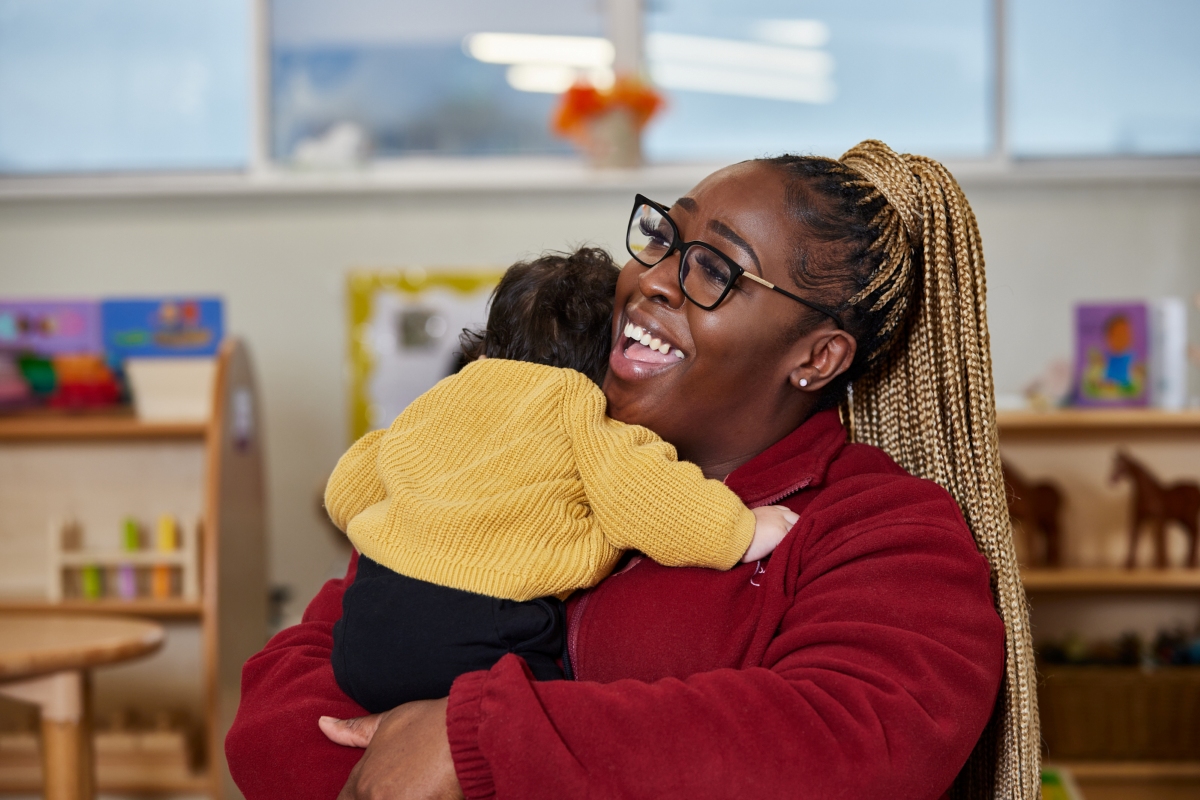
Every child at Partou has a named key person – a consistent, familiar adult who builds a strong relationship with them and gets to know their individual personality, interests, and what helps them feel safe and secure. Your child’s key person will support them through drop-off and transitions as they know what your child needs at this stage to settle before they get their day at nursery started.
Sam describes it this way:
“What we’re doing in those early settling-in weeks is building a secondary attachment. We’re not replacing the bond a child has with their family. We’re extending the circle of people they feel safe with. And that takes time. It looks different for every child.”
When children are unsettled during drop-offs, our team’s priority is always helping them feel safe and calm. We focus on acknowledging what they’re feeling rather than moving past it too quickly. Once a child feels heard, connection follows naturally, and from there we can gently redirect and help them settle into the day. It’s a process, not a quick fix; and we don’t rush it.
Settling in at Partou is gradual by design. We don’t expect children to go from arriving for the first time to a full day in a single step. Families are welcome to stay for initial visits which build up slowly at a pace that suits children’s individual needs.
On tougher mornings, your key person will make sure they communicate with you. This could be a message to let you know your child has settled, a photo of them absorbed in play, or a call if you need one. Research indicates that most children who cry at nursery drop-off settle within a few minutes once engaged by a familiar adult. That doesn’t always make leaving easier for families, but it does help to know that the tears rarely last as long as your worry does.
When to seek further support
Separation anxiety is a typical developmental stage, and the duration of this can vary between children. If you are ready for an additional perspective or support, there are resources in place.
Speak to your GP, health visitor, or CAMHS if you notice: anxiety that isn’t easing after several weeks, physical symptoms at nursery drop-off or in anticipation of it (stomach aches, headaches, vomiting), your child refusing to eat at nursery or showing persistent sleep disruption, or a pattern of avoiding all social situations. Your child’s key person will also discuss any concerns with you and work alongside you to provide support.
These signs don’t automatically mean something is seriously wrong, but they do mean that professional support or reassurance might be helpful. Trust that you know your child and that support is available to you when required.
Further information about separation anxiety
If you would like further information about separation anxiety, we recommend the following sources:
NHS – Information on child development, emotional wellbeing, and when to seek additional support from healthcare professionals.
BBC Tiny Happy People – Expert-backed articles, videos, and activities to support young children’s development and family relationships.
YoungMinds – Practical guidance and support for parents concerned about anxiety and emotional wellbeing in children.
If you have concerns about your child’s separation anxiety or feel you would benefit from personalised advice, speak with your child’s key person, health visitor, or GP, who can help you access further support if needed.
Sam Sleeman-Boss is Head of Early Years at Partou, where she works with nursery teams across the UK to set standards on quality, practice and the things that matter most in the earliest years of a child’s life to deliver inspiring and inclusive early years education.
Find your local Partou Nursery
Search for a nursery
Search our nurseries by name, town, city or postcode.
Frequently Asked Questions:
It tends to begin between six and eight months. This is when babies start to develop ‘object permanence’, which is the understanding that people and things still exist when they can’t see them. Before this point, “out of sight, out of mind” is relatively true for young children.
The most intense phase is typically between 10 and 18 months, with most children managing goodbyes more comfortably by age three to four. It can flare up again during times of change or transition. This is a common part of development rather than a complete return to previous behaviours or ‘regression’.
Very much so. Young children have strong attachments to the people who help them feel safe and secure. Seeking extra comfort, reassurance, or closeness from a trusted adult is a typical part of development and often reflects a child’s need for connection during times of change.
Around 18 to 24 months, many children go through periods where they appear to need more support from their families than they did previously. Holidays, illness, changes in routine, or significant life events can all prompt children to seek additional comfort and reassurance from those they trust most.
Rather than seeing this as a step backwards, it can be helpful to view it as a natural response to developmental changes and new experiences. With patience, consistency, and responsive support, most children move through this phase and return to their usual routines in their own time.
In the very early days of settling into nursery, you will be able to support your child to become familiar with their key person and the environment. Once settling-in sessions are complete and your child has started nursery, lingering at the door can sometimes make it harder for both of you. A warm, confident goodbye and then leaving rather than a prolonged farewell shows children that you trust they are safe and that they can trust this too.
Neither extreme tends to help. Sneaking out without saying goodbye can increase anxiety because your child can’t predict when you might disappear. But a very long goodbye can show hesitancy which may cause your child to become upset as they feel unsure. A short, consistent goodbye routine which stays the same every time works best for demonstrating confidence in their key persons.
Yes. Night waking, difficulty settling at bedtime, and wanting a family member present to fall asleep are all things that can become more pronounced during peaks of separation anxiety. The same principles apply: consistency, comfort, a calm routine, and not rushing the process.
No. In fact, the experience of having a trusted key person outside the family, and learning that you leave and come back, over and over, helps children build the very security that makes separation easier over time. Nursery supports the healthy development of attachment, not the opposite.
If the anxiety is intensifying rather than easing, lasting more than a few weeks without improvement, or affecting eating, sleeping or your child’s ability to engage with daily life, it’s worth speaking to your GP or health visitor. You don’t have to wait until you’re certain something is wrong. Asking is always okay.
Market Harborough nursery chef nominated for national award
Naiane Serafin Godinho, Nursery Chef at Partou Progress House in Market Harborough, has been shortlisted for Chef of the Year at the National NMT Nursery Awards 2026.
Nursery Manager Nina Halls shares what makes Nai's passion for early years nutrition stand out.