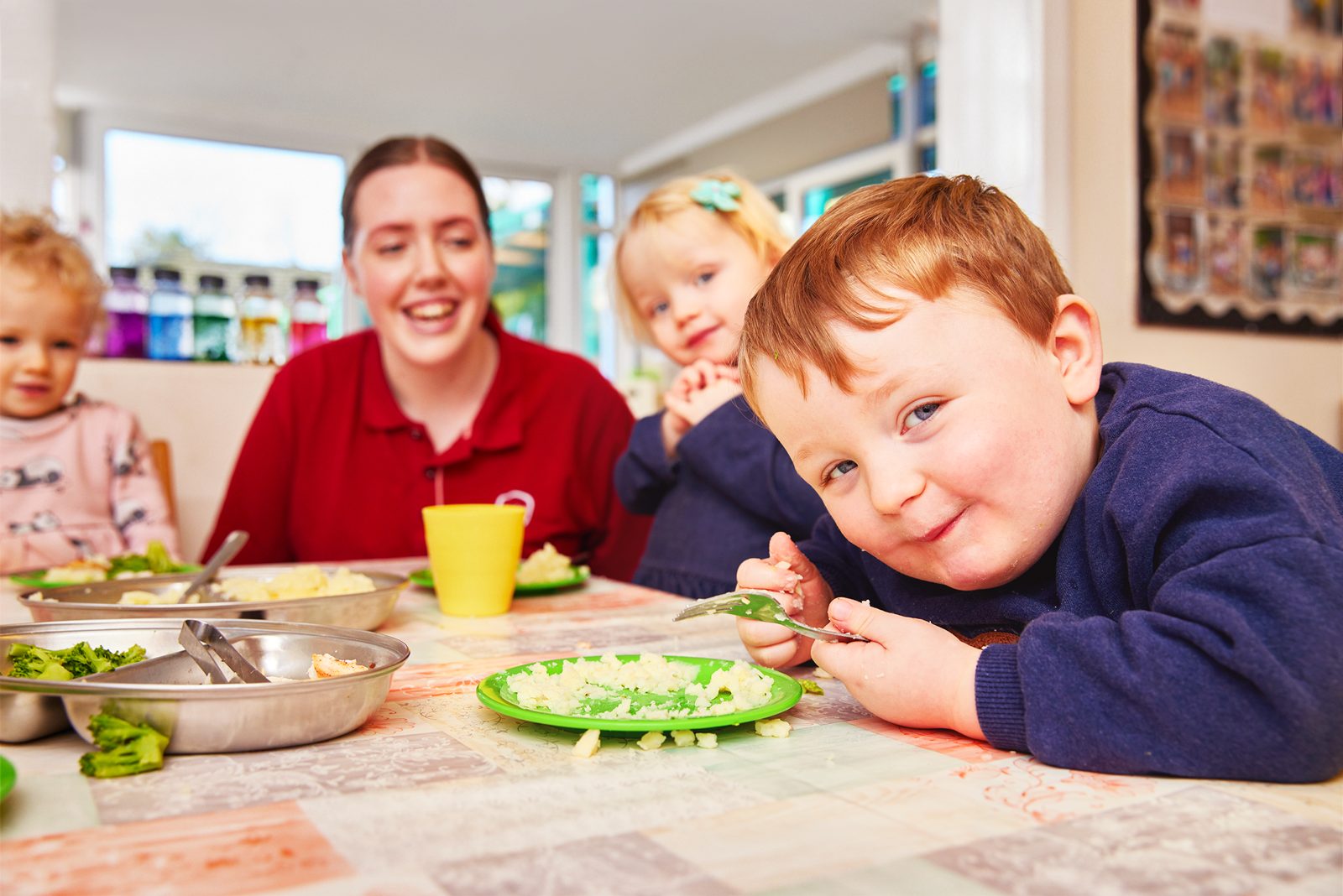
In our Rickmansworth Shepherds Lane nursery setting, a wide variety of nutritious meals are offered that incorporate all food groups. Parents can continue to support their growing children by offering healthy meals at home, but don’t worry, they don’t need to be complicated or Instagram perfect.
Benefits of Healthy Eating
Between the ages of 1 and 4, children are growing and developing rapidly, and their bodies need the support of a nutritious childhood diet. There are so many benefits of healthy eating for young children, from supplying the energy needed to learn and play, to building healthy teeth, bones and muscles. Good early years nutrition also offers protection from illness and disease later in life.
Healthy eating in childhood helps build a strong, healthy body and mind, while building a lasting positive relationship with food.
Important Food Groups for 1-4 Year Olds
The key to a nutritious diet is to offer balanced meals and snacks that include foods from the 5 main food groups:
- Fruit and vegetables
- Carbohydrates
- Proteins
- Dairy
- Fats and Oils
Caution should be taken around highly allergenic foods, in particular the most common childhood allergens – milk, egg, peanut, wheat, soy, tree nut, shellfish, celery and sesame. It is particularly important that early years settings follow allergy protocols, and within our nursery all dishes on our menus are recorded in a detailed allergy matrix.
Portion Sizes for Children 1-4 Year Olds
By the age of one, the aim through weaning is for a child to be eating 3 meals a day with 2 healthy snacks. But just like us adults, children can have different appetites. Try to avoid pressuring children to eat certain amounts as this can damage their relationship with food.
There are some general recommended portion sizes for 1–4-year olds:
- 5 portions of fruit and vegetables a day (approx. 40g per portion)
- Carbohydrates should make up a third of a child’s daily food intake
- Protein offered with every meal
- Dairy offered 2 to 3 times a day
Healthy Meal Ideas to Make at Home
Preparing healthy meals at home can be fun activity to do as a family!
Batch cooking your favourite family dishes, adding in extra veggies, then freezing in portions is a great way to make stress-free, healthy meals.
Why not try this quick and nutritious breakfast recipe?
1,2,3 Pancakes – only 3 ingredients and ready in minutes.
Ingredients: 1 banana, 2 eggs, 3 tablespoons of old fashioned oats.
Mix together in a bowl. Spoon into a hot pan with a little cooking oil. Cook for a few minutes on each side until firm and cooked through. Pancakes made easy and healthy!
Early years nutrition is a priority at Partou and we want to support parents in making healthy choices for their children in any way we can. Don’t hesitate to get in touch to find out more.